

Zero Lab Treatment Information
Botox Resistance: Is It You?
Hello, I am Dr. Dong Won Kim, Medical Director of Zero Lab Clinic, one minute from Hongdae (Hongik Univ.) Station Exit 1.
"It used to last four months, but lately it seems to wear off after just two." I hear this often in the consultation room. When I do, the first thing I look back on is my own injection. Still, botox resistance is worth checking at least once. Today I want to go over why resistance develops, who in particular should pay attention, and how to set intervals and doses safely, with the research behind it.
Botox resistance: what is actually happening in the body
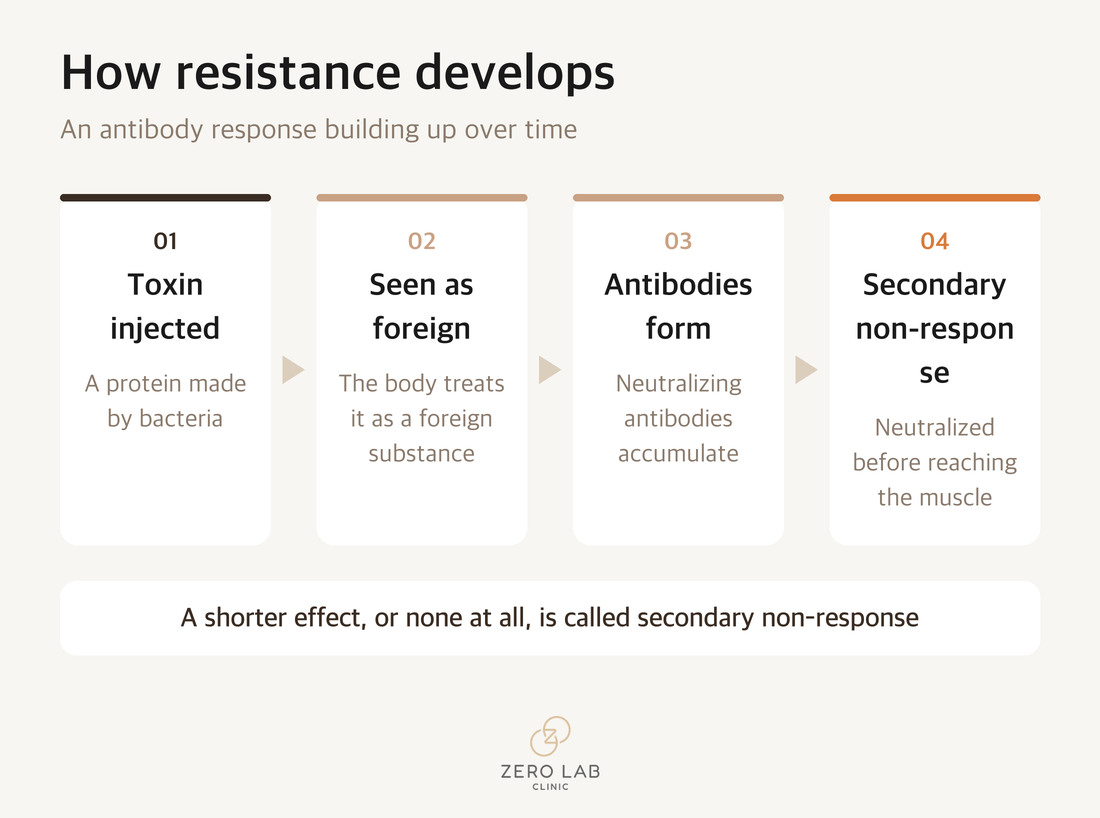
Toxin is a protein produced by bacteria. When the body recognizes this protein as foreign, it produces neutralizing antibodies, and once those antibodies accumulate past a certain level, the injected toxin is neutralized before it can act on the muscle. A treatment that worked well at first gradually lasts a shorter time, or stops responding altogether, and this is called secondary non-response[1].
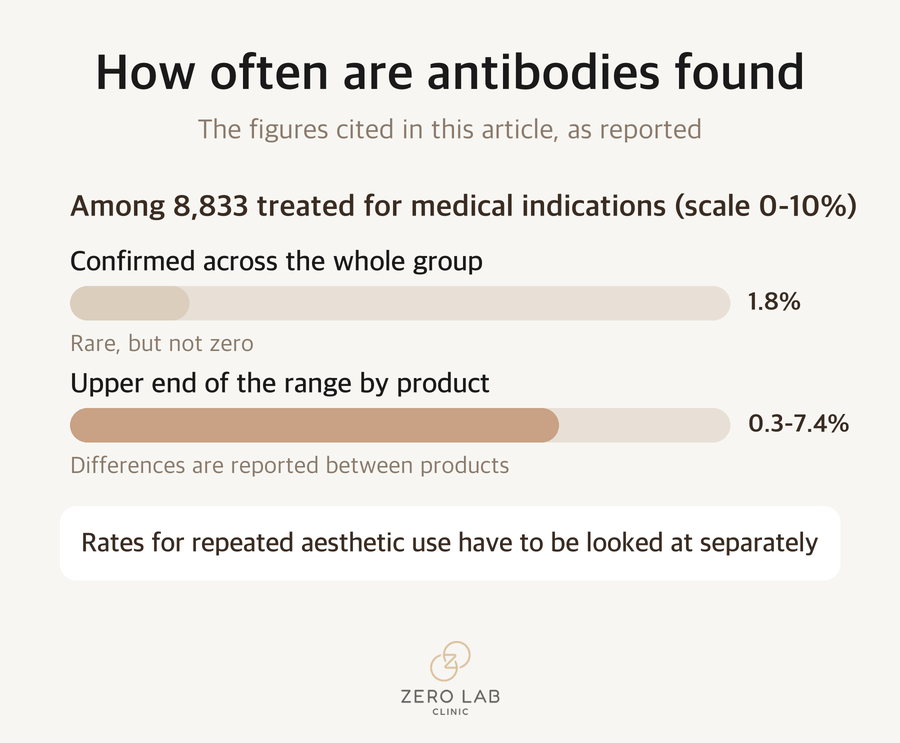
It is not common. In a meta-analysis of 8,833 patients treated with toxin for therapeutic purposes, neutralizing antibodies were confirmed in 1.8%[2]. That said, this figure is based on medical indications, and it has been pointed out that the picture may change as the aesthetic trend toward starting younger and injecting more often continues[3].

Allergan Aesthetics Infinity trophy and campaign panel
Factors that raise the risk of resistance
| Factor | Why it matters |
|---|---|
| Intervals shorter than 3 months | The shorter the gap between repeat exposures, the greater the risk of antibody formation |
| Large single doses | More protein enters the body at one time |
| Cumulative dose | The longer and more often you receive it, the more total exposure accumulates |
| Touch-ups within 2-3 weeks | Short-interval top-up injections are cited together as a risk factor |
The items above are drawn from a review paper on secondary non-response to aesthetic toxin[1]. You will notice what they have in common: most of them come down to how often and how much. That is why the treatment plan matters before the choice of product.
The complexing protein question, and how far the evidence goes
The same review also notes that complexing proteins in a formulation may act as an adjuvant stimulating the immune response[1]. This is where the argument comes from that pure toxin formulations without complexing proteins have an advantage on this point.
But this point deserves caution. In the meta-analysis above, neutralizing antibody rates by product ranged from 7.4% down to 0.3%, and among the formulations that do contain complexing proteins there were cases as low as 0.3%[2]. In other words, the presence or absence of complexing proteins does not explain everything; variables such as the manufacturing process and the total protein load act alongside it. So we do not tell people that avoiding complexing proteins makes resistance a non-issue.
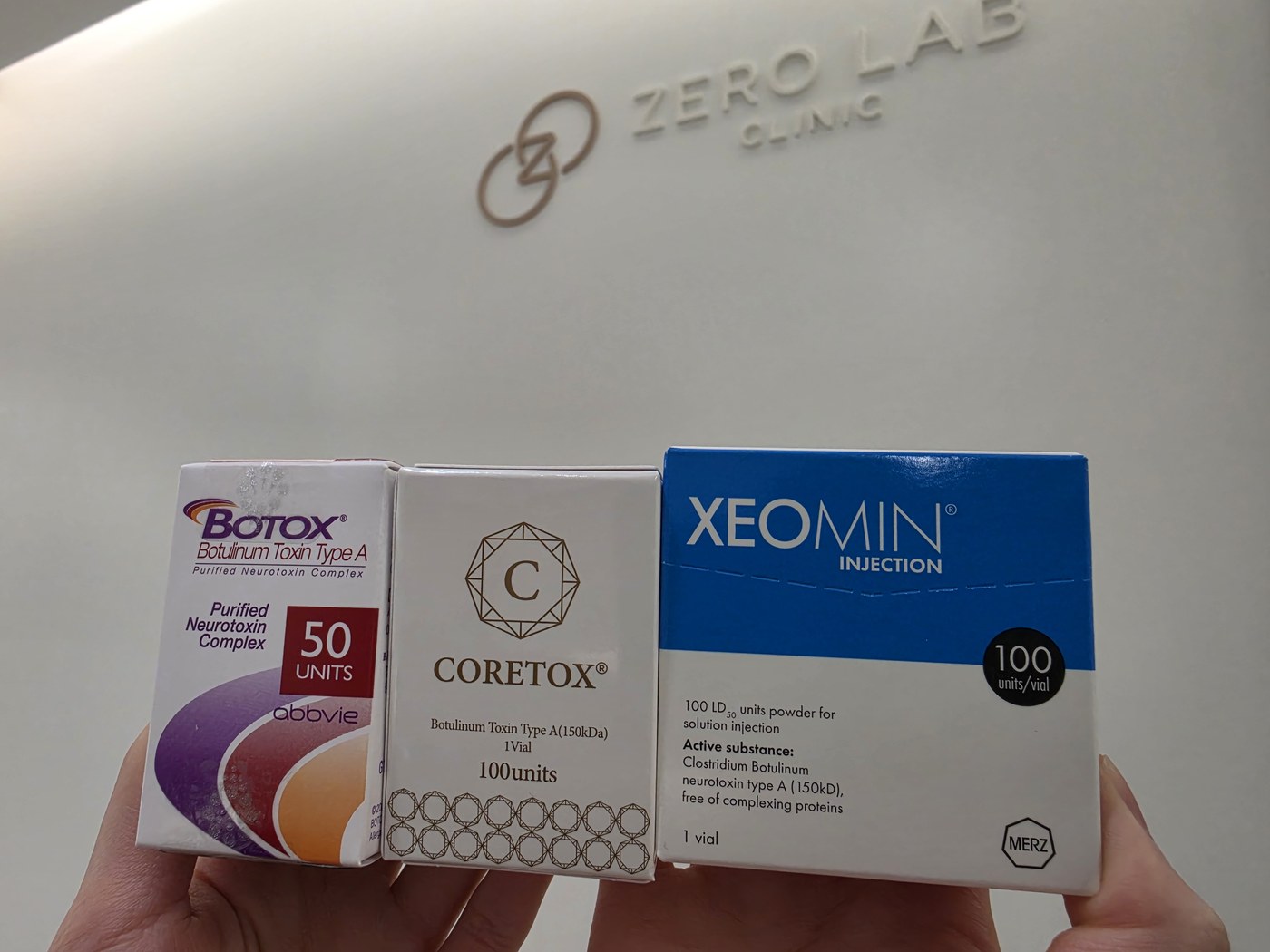
These are the toxin products we use. The boxes themselves state whether complexing proteins are included.
Please mention it in consultation if this is you
- Treatment of large muscles such as the trapezius or calves, where the dose is larger than for the face
- A history of short-interval repeat procedures such as dermotoxin (skin botox)
- Regular jaw botox since your twenties, meaning a long period of cumulative exposure
- Having several areas treated on the same day
- Continually moving the interval earlier because the effect seems to fade quickly
The trend toward larger doses and younger starting ages in aesthetic practice has been identified as a background factor raising resistance risk in Asia[3]. If any of the above applies to you, we suggest discussing the choice of formulation at the consultation stage.
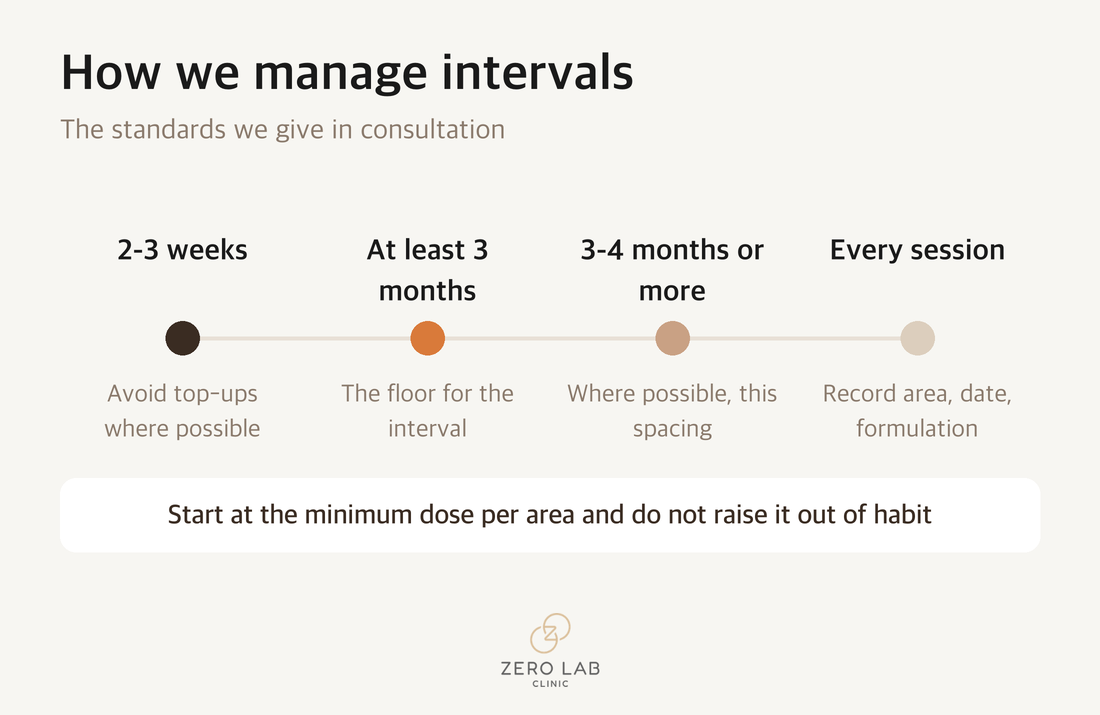
The standards we work to
- We suggest leaving at least 3 months between procedures, and 3 to 4 months or more where possible
- Top-up injections within 2-3 weeks to reinforce the effect are best avoided where possible
- We start with the minimum dose each area needs, and do not raise the dose out of habit
- Keeping a record of the area, the date, and the formulation used makes later judgment far more accurate
- We watch body botox and dermotoxin (skin botox) especially closely. One involves large doses and the other tends toward short intervals, so both fall squarely into the risk factors above. In these cases we discuss the choice of formulation as well
When the effect does not feel the way it used to, the cause is not always resistance. It can be the injection site, the dose, the state of the muscle, or how the product was stored, so we tend to review the treatment history first. The principle we have settled on over seven years since opening and more than 200,000 patients is simple: do not rush the schedule forward, and use only as much as is needed.
Many people ask which product they should switch to. My answer is always the same. Changing the formulation is not the first step. If you have a record of the intervals, doses, and sites you have had so far, the judgment comes much faster. If you do not, simply starting that record today already changes the next treatment.
Lifting and skin boosters run on different standards for dose and interval, so we covered each separately. For lifting, see Ultherapy or Thermage First?, and for skin boosters, Rejuran, Juvelook, Exosomes.
Treatments covered in this article
Prices and booking
References
[1] Kroumpouzos G, Silikovich F. Exploring nonresponse to botulinum toxin in aesthetics: narrative review of key trigger factors and effective management strategies. JMIR Dermatol. 2025;8:e69960. DOI: https://doi.org/10.2196/69960
[2] Rahman E, Alhitmi HK, Mosahebi A. Immunogenicity to botulinum toxin type A: a systematic review with meta-analysis across therapeutic indications. Aesthet Surg J. 2022;42(1):106-120. DOI: https://doi.org/10.1093/asj/sjab058
[3] Ho WWS, Chan L, Corduff N, et al. Addressing the real-world challenges of immunoresistance to botulinum neurotoxin A in aesthetic practice: insights and recommendations from a panel discussion in Hong Kong. Toxins (Basel). 2023;15(7):456. DOI: https://doi.org/10.3390/toxins15070456
The three papers above are indexed in PubMed. This article provides general medical information; decisions about an individual's condition are made through consultation.
Some images in this article were generated with AI.
This article was written directly by Zero Lab Clinic to provide medical information. Results of any procedure vary with individual skin condition, and side effects are possible. Please decide on a procedure only after an in-person consultation with a doctor.