
Zero Lab Skin Lecture
Acne and food — will cutting out milk help?
Hello, I am Dr. Dong Won Kim, Medical Director of Zero Lab Clinic, one minute from Hongdae (Hongik Univ.) Station Exit 1.
The question I get asked most by people who come in for acne is “My skin is in a really bad state - what should acne-prone skin be careful about eating?”. Should they cut out milk, is wheat flour the problem, what about chocolate - I am asked almost every time.
To give the answer first, food is part of the cause. Not all of it, and not unrelated either. Today I want to show you with numbers roughly where in between it sits.
Let us start with how big a share food takes
Acne is strongly influenced by heredity. And there is a study that measured how strong that “strongly” is.
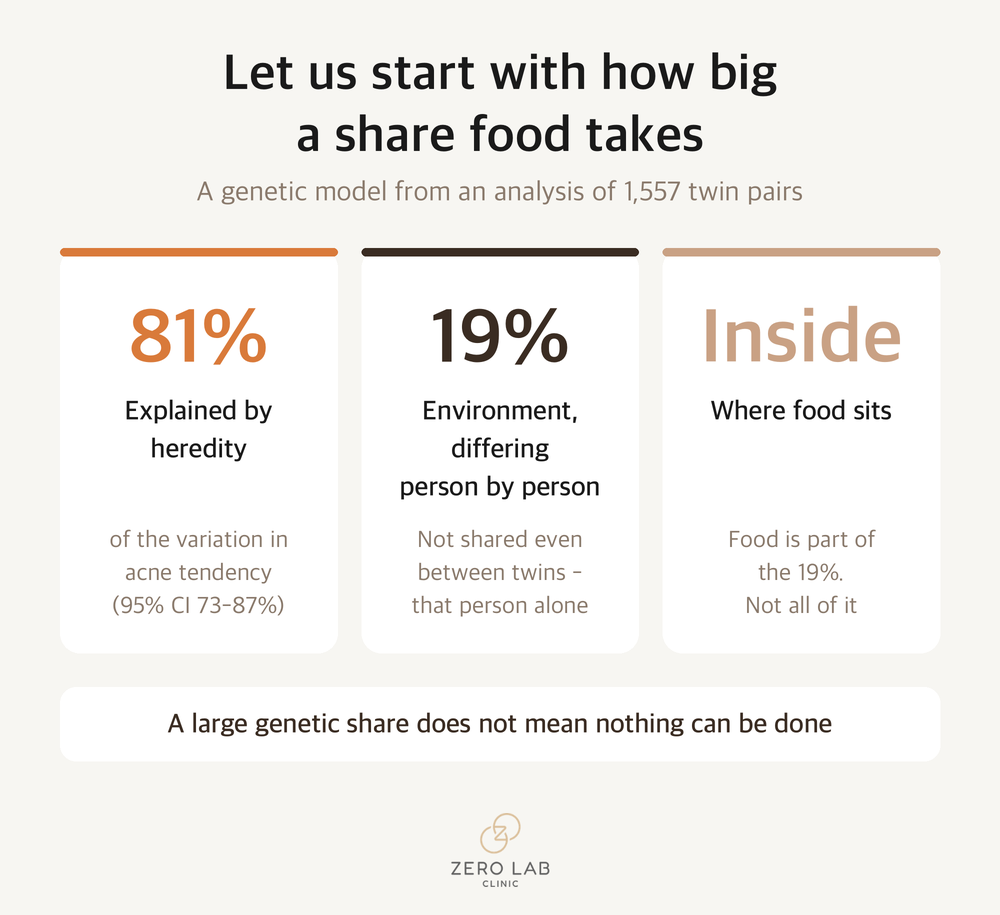
monozygotic 458 pairs and dizygotic 1,099 pairs, 1,557 twin pairs in all, were analysed. When a genetic model was run, 81% of the variation in the tendency to acne was explained by heredity (95% confidence interval 73-87%)[1].
What matters is the remainder. The same model puts 19% down to environmental factors that differ from person to person. These are factors not shared even between twins, ones that apply to that person alone. Food sits inside that 19%.
So when there is a family history, I talk about that first, and then we look at the 19%. A large genetic share does not mean there is nothing you can do.
Milk - an association does show up, but not in the direction people expect
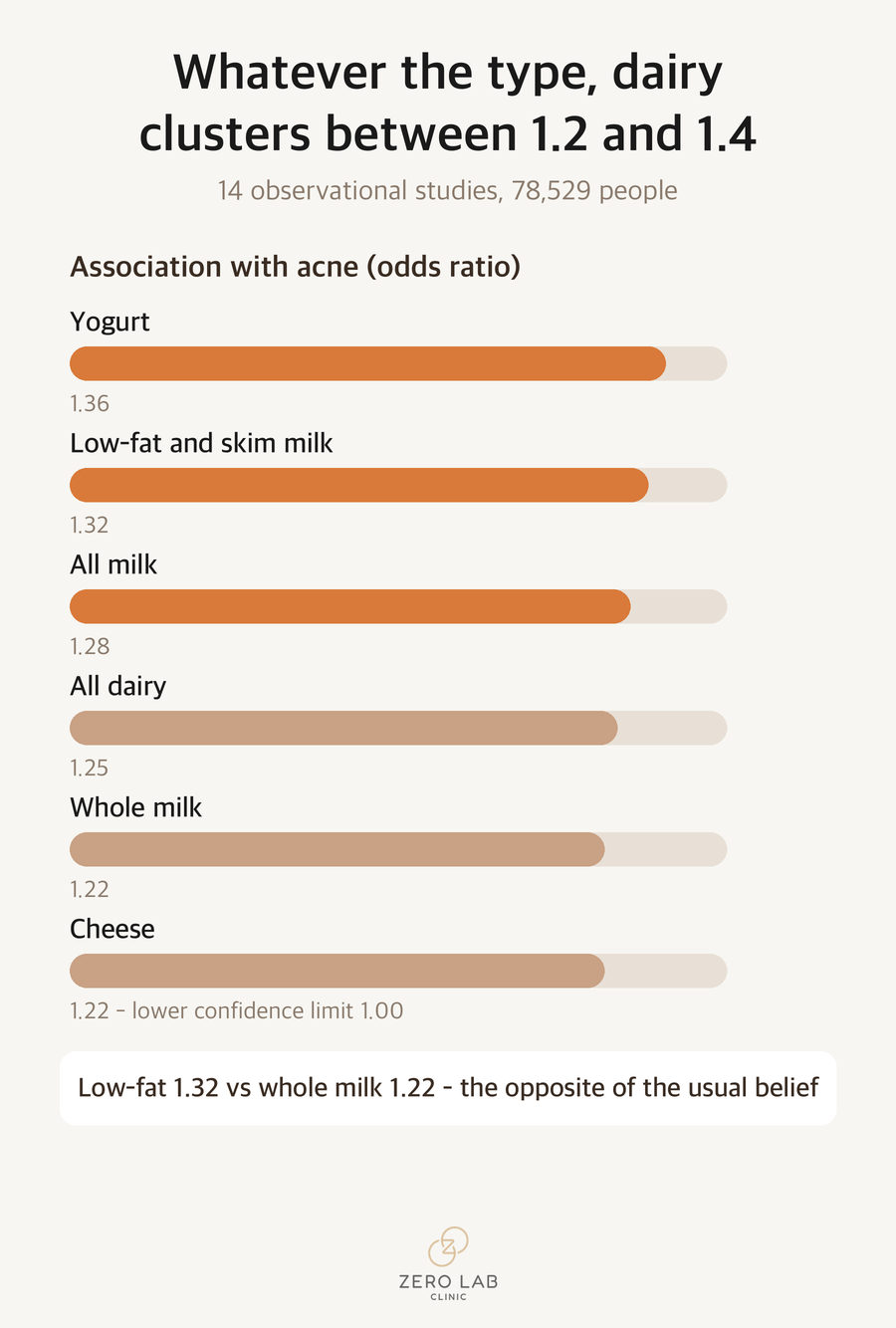
There is a meta-analysis that pooled 14 observational studies. It covers 23,046 people with acne and a control group of 55,483 people, for a total of 78,529 people.
| Category | Odds ratio |
|---|---|
| All dairy | 1.25 |
| All milk | 1.28 |
| Whole milk | 1.22 |
| Low-fat and skim milk | 1.32 |
| Yogurt | 1.36 |
| Cheese | 1.22 (lower confidence limit 1.00) |
Low-fat and skim milk come out higher than whole milk[2]. In another meta-analysis the gap is wider still, with skim milk at 1.82[3]. That runs opposite to the common belief that “the fatty ones are the problem”.
For cheese the lower confidence limit is exactly 1.00, which leaves it in a place where an association cannot be stated with certainty. The reason I spell out even this much comes later.
But the same authors produced the opposite result
This is the part I most want to get across in this article.
The team that wrote that meta-analysis published in the same issue of the same journal one more study. It took Danish adults, 20,416 of them, and divided them by the genotype that determines the ability to digest milk. Dividing people by genes rather than by questionnaire avoids the problem of “having acne makes you remember your diet differently”.
The result was no association. Among women aged 20-39 the odds ratio was 0.93 and among men 0.49, and neither was statistically significant. The comparison split by genotype was also not significant, at 0.84[4].
On the meta-analysis side, publication bias is attached to it, acknowledged by the authors (p = 4.71×10⁻⁵). They also write that the association weakens once a correction is applied[2].
To put it together: it is true that an association is observed in people who drink a lot. Whether that association is causal is still divided, though, and the same research team has put out results on both sides.
So does it work if I just cut down the amount?
This is the question I get back most often in the clinic. They cannot give it up, so would cutting down do?
This is as far as the literature takes us.
The association is larger at higher intakes. In data split by how often milk is drunk, the 2-6 glasses a week band gave an odds ratio of 1.24, which was not statistically significant, while 1 glass a day rises to 1.41 and 2 or more glasses a day to 1.43[2]. A study that analysed dose-response separately also found the linear relationship significant for dairy overall, whole milk and skim milk[3].
A similar shape shows up with other foods. In a study of 1,299 middle-school students in Shanghai, they were scored by how many high-sugar, high-fat items they ate, and up to 2 items it was not significant, but from 3 items it became significant (odds ratios 2.23 → 2.14 → 3.12)[5].
But this is where we have to stop.
Not one study has tested an intervention that reduces intake. Nor is there a trial of cutting it out completely. Every number above is observational data “comparing people who eat a lot with people who eat little”, not “they cut down and it got better”.
And the fact that it was not significant in the lower bands is not proof that “this much is fine” either. There may simply have been too few people in those bands for the statistics to pick anything up.
Glycemic load - there are trials, but the results go in different directions
On lowering the glycemic load of the whole diet there are a few randomised trials.
In a 12-week trial that split 43 men into a low-glycemic-load diet group and a control group, total lesions came out at a fall of 21.9 against a fall of 13.8 (p = 0.01)[6]. In Korea too there is a trial that followed 32 people for 10 weeks, and beyond lesion counts it confirmed a reduction in sebaceous gland size and lower inflammatory markers on biopsy as well[7].
There are results in the other direction too. In India, a trial in 84 people compared benzoyl peroxide alone with benzoyl peroxide plus a low-glycemic-load diet, and there was no difference in acne counts (p = 0.931). Only body mass index and insulin resistance improved in the diet group[8].
And the trials that came out positive have their limits too. In the 43-person trial, over 12 weeks the diet group lost 2.9kg in weight. The authors wrote directly that they could not separate out what produced the effect[9].
Fried food, wheat flour, chocolate - each one is different
These are the three I am asked about most, and the strength of the evidence differs for each.
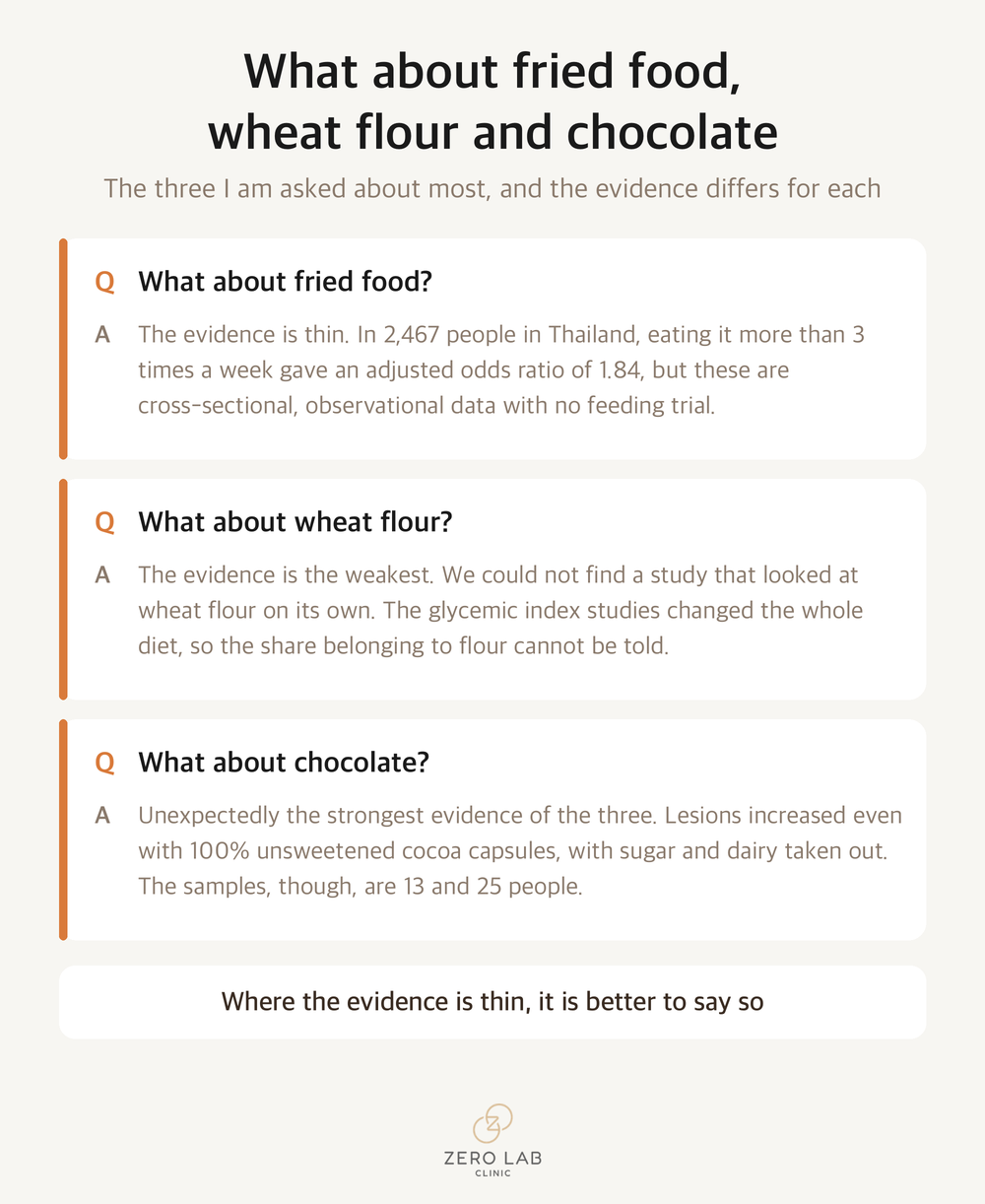
For fried food the evidence is thin. In a study of 2,467 people in Thailand, eating oily and fried food more than 3 times a week gave an adjusted odds ratio of 1.84[10]. A French cohort of 24,452 people also put fatty and sugary foods at 1.54[11]. That said, both are cross-sectional, observational data, and there is no trial that actually fed people the food.
For wheat flour the evidence is the weakest. To be honest with you, we could not find a study that looked at wheat flour on its own. The glycemic index studies changed the whole diet, so the share belonging to wheat flour cannot be told. There is no acne study that removes gluten either. The same Thai study does put white rice at 1.80[10], but that is rice, not wheat flour.
Chocolate, unexpectedly, has the strongest evidence of the three. In a double-blind, placebo-controlled trial that gave only 100% unsweetened cocoa in capsules, with the sugar and dairy taken out, lesions increased significantly at day 4 and day 7 (13 completed)[12]. In another study, using chocolate with almost no sugar in it, people were given 99% dark chocolate, 25g a day for 4 weeks, and again lesions increased from week 2 (25 people)[13]. It means the explanation that “chocolate is about the sugar” is not the whole story.
The samples, though, are 13 and 25 people. That is not a size that settles anything.
I will add that there is a 1969 study long used as the evidence that “chocolate has nothing to do with acne”, and in 2011 its design was publicly rebutted[14]. The source of the common belief turns out not to have been that solid.
So this is what we say
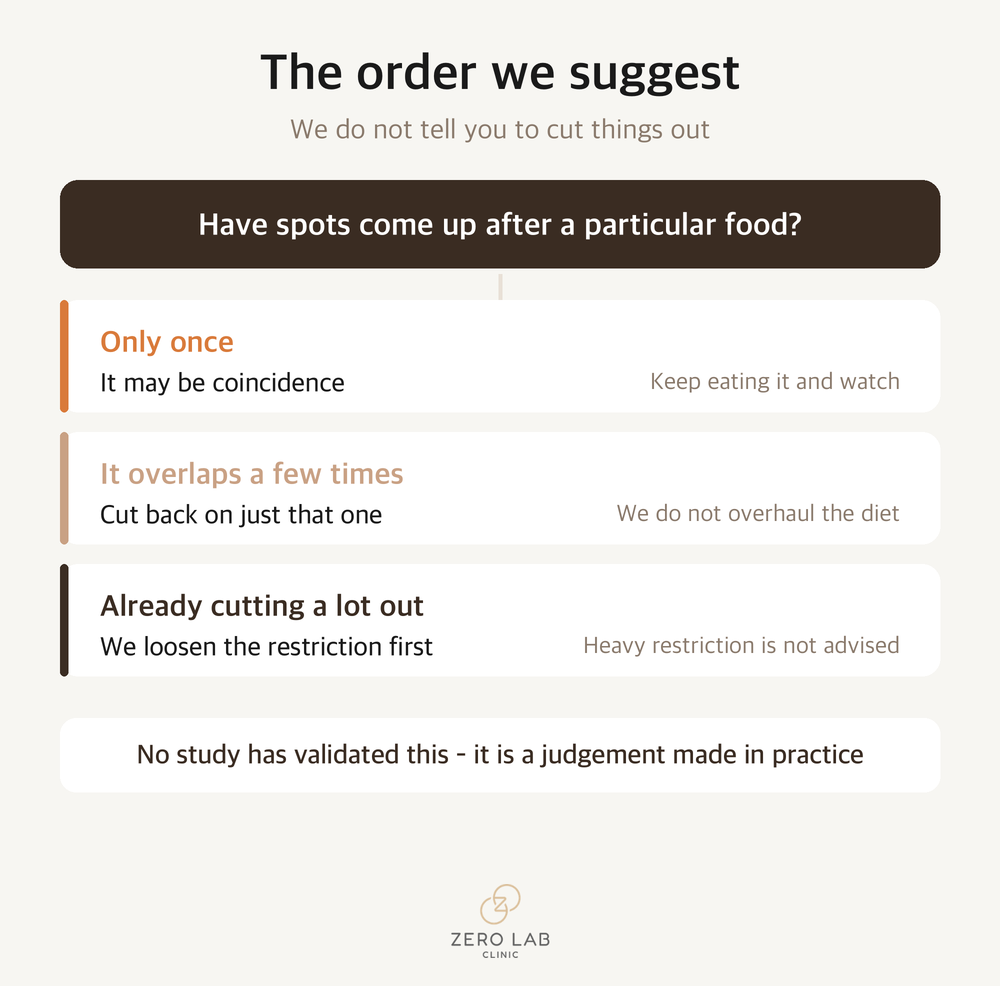
We do not tell you to cut things out.
Instead, we suggest you first look for whether anything among the foods you eat brings spots up repeatedly. If spots come up a few days after a particular food, and that happens several times over, cutting back on just that one thing becomes the starting point.
There is something to disclose here as well. There is no study that has validated this approach itself. We could not find a study testing food diaries, or removing a suspected food and then eating it again, in acne. It is a judgement we make in practice, not something taken from the literature.
The direction, though, is not off. A European review published this year sums it up this way - avoid severely restrictive diets, and recommend a balanced diet and a healthy weight[15]. In the American Academy of Dermatology's 2024 acne guideline too, there is no dietary item anywhere among the 18 recommendations and 5 good practice statements[16].
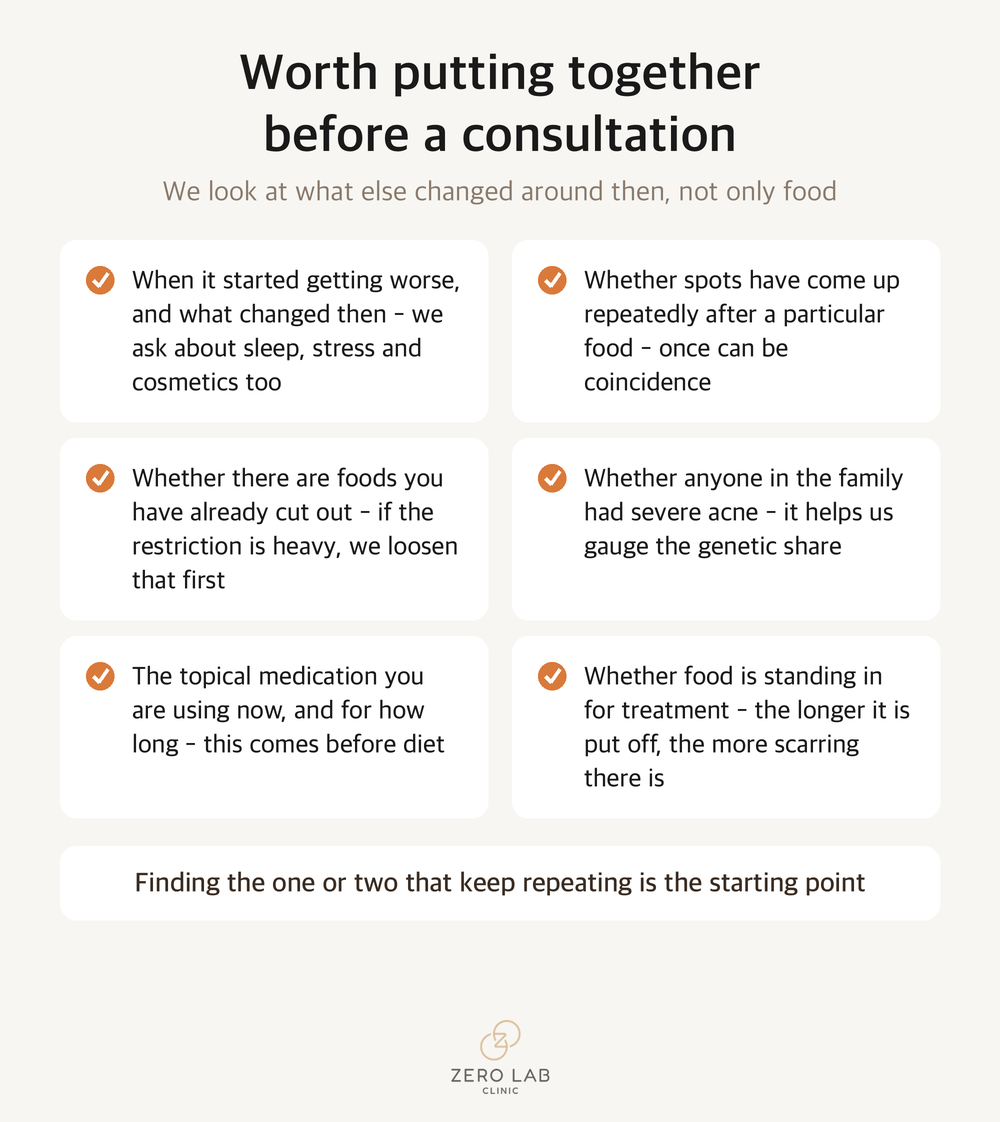
Not letting cutting back on food stand in for treatment is the most important thing. The longer treatment is put off, the more scarring there is.
What we check at a consultation
- When it started getting worse, and what changed around that time - we ask about sleep, stress and cosmetics, not only food
- Whether spots have come up repeatedly after a particular food - once can be coincidence
- Whether there are foods you have already cut out - if the restriction is excessive, that is the first thing we loosen
- Whether anyone in the family had severe acne - it helps us gauge whether the genetic share is on the larger side
- The topical medication you are using now, and for how long - this comes before diet
In closing
Many people think acne will come under control if they just cut out one particular food. It does not work that way.
The share heredity explains is large, and food is part of the remaining 19%. With milk an association is observed, but the same research team also produced the opposite result; with glycemic load there are trials, but the results are split. There is still no trial showing that cutting the amount down made things better.
So I do not tell you to overhaul everything you eat. Find the one or two things that keep catching you out, cut back on just those, and carry on with treatment as treatment - that, I think, is the better way.
References
[1] Bataille V, Snieder H, MacGregor AJ, Sasieni P, Spector TD. The influence of genetics and environmental factors in the pathogenesis of acne: a twin study of acne in women. J Invest Dermatol. 2002;119(6):1317-1322. DOI: https://doi.org/10.1046/j.1523-1747.2002.19621.x
[2] Juhl CR, Bergholdt HKM, Miller IM, Jemec GBE, Kanters JK, Ellervik C. Dairy intake and acne vulgaris: a systematic review and meta-analysis of 78,529 children, adolescents, and young adults. Nutrients. 2018;10(8):1049. DOI: https://doi.org/10.3390/nu10081049
[3] Aghasi M, Golzarand M, Shab-Bidar S, Aminianfar A, Omidian M, Taheri F. Dairy intake and acne development: a meta-analysis of observational studies. Clin Nutr. 2019;38(3):1067-1075. DOI: https://doi.org/10.1016/j.clnu.2018.04.015
[4] Juhl CR, Bergholdt HKM, Miller IM, Jemec GBE, Kanters JK, Ellervik C. Lactase persistence, milk intake, and adult acne: a Mendelian randomization study of 20,416 Danish adults. Nutrients. 2018;10(8):1041. DOI: https://doi.org/10.3390/nu10081041
[5] Cai R, et al. Association between dietary patterns and acne among adolescents in Shanghai. Front Public Health. 2026;14:1827055. DOI: https://doi.org/10.3389/fpubh.2026.1827055
[6] Smith RN, Mann NJ, Braue A, Mäkeläinen H, Varigos GA. A low-glycemic-load diet improves symptoms in acne vulgaris patients: a randomized controlled trial. J Am Acad Dermatol. 2007;57(2):247-256. DOI: https://doi.org/10.1016/j.jaad.2007.01.046
[7] Kwon HH, Yoon JY, Hong JS, Jung JY, Park MS, Suh DH. Clinical and histological effect of a low glycaemic load diet in treatment of acne vulgaris in Korean patients: a randomized, controlled trial. Acta Derm Venereol. 2012;92(3):241-246. DOI: https://doi.org/10.2340/00015555-1346
[8] Pavithra G, Upadya GM, Rukmini MS. A randomized controlled trial of topical benzoyl peroxide 2.5% gel with a low glycemic load diet versus topical benzoyl peroxide 2.5% gel in the treatment of mild to moderate acne. Indian J Dermatol Venereol Leprol. 2019;85(5):486-490. DOI: https://doi.org/10.4103/ijdvl.IJDVL_109_17
[9] Smith RN, Mann NJ, Braue A, Mäkeläinen H, Varigos GA. The effect of a high-protein, low glycemic-load diet versus a conventional, high glycemic-load diet on biochemical parameters associated with acne vulgaris: a randomized, investigator-masked, controlled trial. Am J Clin Nutr. 2007;86(1):107-115. DOI: https://doi.org/10.1093/ajcn/86.1.107
[10] Roengritthidet K, Kamanamool N, Udompataikul M, et al. Association between diet and acne severity: a cross-sectional study in Thai adolescents and adults. Acta Derm Venereol. 2021;101(12):adv00611. DOI: https://doi.org/10.2340/actadv.v101.569
[11] Penso L, Touvier M, Deschasaux M, et al. Association between adult acne and dietary behaviors: findings from the NutriNet-Santé prospective cohort study. JAMA Dermatol. 2020;156(8):854-862. DOI: https://doi.org/10.1001/jamadermatol.2020.1602
[12] Caperton C, Block S, Viera M, Keri J, Berman B. Double-blind, placebo-controlled study assessing the effect of chocolate consumption in subjects with a history of acne vulgaris. J Clin Aesthet Dermatol. 2014;7(5):19-23. PMID: 24847404
[13] Vongraviopap S, Asawanonda P. Dark chocolate exacerbates acne. Int J Dermatol. 2016;55(5):587-591. DOI: https://doi.org/10.1111/ijd.13188
[14] Goh W, Kallianpur KJ, Chow D, Fujii L. Chocolate and acne: how valid was the original study? Clin Dermatol. 2011;29(4):459-460. DOI: https://doi.org/10.1016/j.clindermatol.2011.05.002
[15] Dessinioti C, Dréno B. Diet and acne: a review. J Eur Acad Dermatol Venereol. 2026. DOI: https://doi.org/10.1111/jdv.70504
[16] Reynolds RV, Yeung H, Cheng CE, et al. Guidelines of care for the management of acne vulgaris. J Am Acad Dermatol. 2024;90(5):1006.e1-1006.e30. DOI: https://doi.org/10.1016/j.jaad.2023.12.017
The 16 papers above are indexed in PubMed. This article provides general medical information; decisions about an individual's condition are made through consultation.
This article was written directly by Zero Lab Clinic to provide medical information. Results of any procedure vary with individual skin condition, and side effects are possible. Please decide on a procedure only after an in-person consultation with a doctor.